
Define the Distribution Point
Identify the incoming supply, municipal cabinet, lighting feeder, lighting zone or auxiliary load being measured. Each metering point should support a defined energy, operating or maintenance requirement.
Design energy measurement schemes for street-lighting feeders, field cabinets and municipal distribution zones. YTL supplies energy metering hardware and model-specific data interfaces for local measurement or remote collection. Lighting control, city-management platforms, network services and field installation remain project-specific.
Identify the incoming supply, municipal cabinet, lighting feeder, lighting zone or auxiliary load being measured. Each metering point should support a defined energy, operating or maintenance requirement.
Review enclosure dimensions, DIN-rail or panel mounting, terminal access, conductor routing, auxiliary supply, temperature or exposure conditions and safe service access.
Confirm the selected model interface, network or gateway owner, data interval, platform fields, exception process, asset labeling, replacement procedure and field-support responsibility.
Use a repeatable site template for each cabinet or lighting zone. A standard template simplifies model selection, commissioning, replacement and scaled rollout, while still allowing site-specific electrical and enclosure checks.
Confirm single- or three-phase input, voltage, maximum current, direct or transformer connection, feeder purpose and required energy or operating data.
Confirm DIN-rail or panel space, enclosure depth, terminals, conductor route, auxiliary power, environmental conditions, labeling and maintenance access.
Identify the local or remote data owner, selected model interface, gateway or network route, address plan, required platform fields, exception handling and operating responsibility.
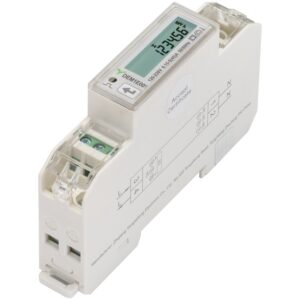
45 A Single-Phase DIN-Rail Energy Meter with SO Pulse Output
View Products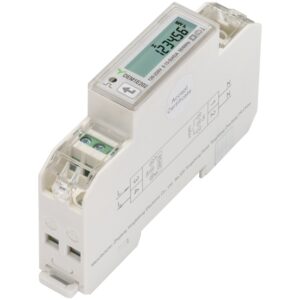
45 A Single-Phase DIN-Rail Energy Meter with RS485
View Products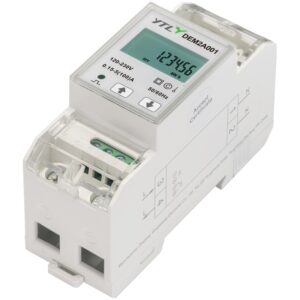
100 A Single-Phase DIN-Rail Energy Meter with SO Pulse Output
View Products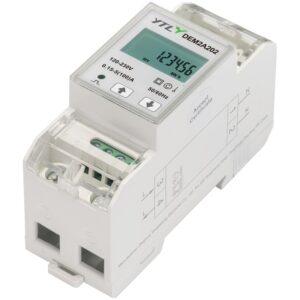
100 A Single-Phase DIN-Rail Energy Meter with RS485
View Products
45 A Single-Phase DIN-Rail Energy Meter with SO Pulse Output
View Products
45 A Single-Phase DIN-Rail Energy Meter with RS485
View Products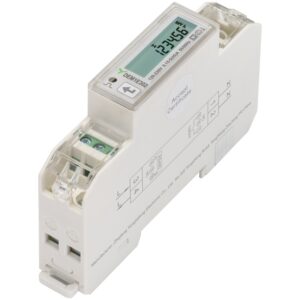
45 A Single-Phase DIN-Rail Energy Meter with RS485 and TOU
View Products
100 A Single-Phase DIN-Rail Energy Meter with SO Pulse Output
View Products
100 A Single-Phase DIN-Rail Energy Meter with RS485
View ProductsList each cabinet or lighting zone, location, circuit purpose, responsible owner, electrical configuration and rollout quantity.
Provide phase, voltage, maximum current, direct or transformer connection, auxiliary supply and the relevant single-line or wiring drawing.
Confirm available DIN-rail or panel space, depth, terminals, cable route, enclosure protection, temperature conditions and service access.
State whether the project requires periodic energy records, remote operational visibility, alarms, maintenance analysis or a defined platform report.
Confirm the selected-model interface, gateway or network topology, address plan, site connectivity, platform fields and operating owner.
Define the asset label, commissioning record, replacement procedure, communication reconfiguration, spare-unit strategy and field-support contact.
Start with the electrical distribution structure: incoming supply, municipal cabinet, lighting feeder, lighting zone or defined auxiliary load. Each measurement point should support a clear energy, operational or maintenance requirement.
Confirm the electrical input, mounting space, terminal access, auxiliary supply, enclosure protection, temperature conditions, communication route and maintenance requirements. The meter should be installed within a suitable protected enclosure according to its model-specific environmental and installation limits.
Remote collection depends on the exact meter interface, gateway or network route, site connectivity, required data fields and responsibility for operating the communication path. Compatibility must be verified against the selected model and destination system.
YTL focuses on energy metering hardware, communication interfaces and project-specific integration support. YTL supplies metering devices and technical information required for measurement, communication and system integration according to the verified project configuration. Complete smart city platforms, lighting control systems, municipal network services and field operation platforms are typically provided by project owners' appointed system integrators or specialized platform providers.
Tell us your requirements and our team will provide a professional solution and quotation within 24 hours.