
Create a measurement hierarchy
Map main incomers, feeders, equipment, tenants, PV, storage or EV loads to the management questions and reports they support.

Build a reliable metering layer for EMS reporting, alarms, allocation and energy-performance analysis. Define the measurement hierarchy, electrical input, required data points and platform acceptance method before selecting meters and gateways.
Map main incomers, feeders, equipment, tenants, PV, storage or EV loads to the management questions and reports they support.
Specify the required measurements, data interval, timestamps, labels, exception treatment, reconciliation method and data owner.
Confirm the selected model interface, gateway or controller, protocol and register map, addressing, time handling, security or access constraints and acceptance testing before deployment.
Start with required decisions and reports, then work backwards to the electrical circuit and model-specific data path. This prevents a dashboard from being designed around unavailable measurements.
Confirm which incoming feeders, branches, equipment or distributed-energy points are required and how each record is labelled and aggregated.
For each point, confirm AC or DC, phase, voltage, current, direct or transformer or sensor input, installation type and required measurements.
Confirm the selected model interface, protocol and register data, gateway topology, data interval, timestamp approach, acceptance report and ongoing ownership.
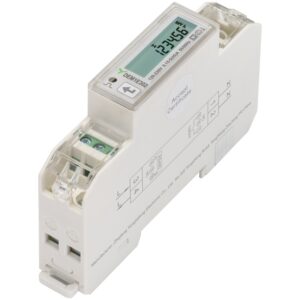
45 A Single-Phase DIN-Rail Energy Meter with RS485 and TOU
View Products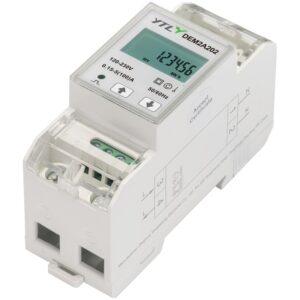
100 A Single-Phase DIN-Rail Energy Meter with RS485
View Products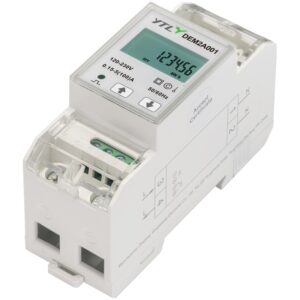
100 A Single-Phase DIN-Rail Energy Meter with SO Pulse Output
View Products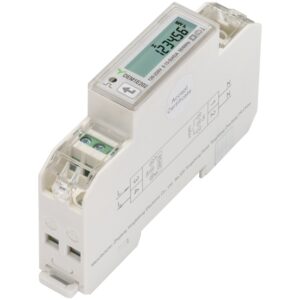
45 A Single-Phase DIN-Rail Energy Meter with RS485
View Products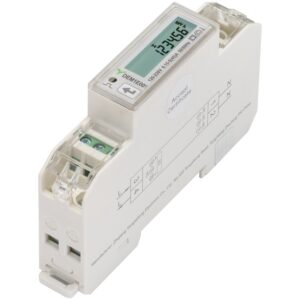
45 A Single-Phase DIN-Rail Energy Meter with SO Pulse Output
View Products 45 A Single-Phase DIN-Rail Energy Meter with RS485
View Products 45 A Single-Phase DIN-Rail Energy Meter with RS485 and TOU
View Products 100 A Single-Phase DIN-Rail Energy Meter with SO Pulse Output
View Products 100 A Single-Phase DIN-Rail Energy Meter with RS485
View ProductsList the decisions, reports or alerts the EMS must support and map each one to a physical energy measurement point.
For every meter, document location, circuit name, phase, voltage, current input, CT/PT or sensor details and install method.
Define values, units, interval, timestamp behavior, labels, hierarchy, retention and exception handling required by the EMS.
Provide the selected platform, interface, protocol and register requirements, gateway topology, addressing and cybersecurity or access restrictions.
Agree on electrical comparison, CT/PT or sensor validation, register mapping, timestamp review, missing-data recovery and report validation.
Assign responsibilities for device configuration, network, platform mapping, alarm response, documentation and future changes.
Define the measurement hierarchy, data owner, required values, electrical input, installation location, data interval, platform interface and acceptance criteria for each measurement point.
No. The selected model interface, protocol or register documentation, network design, gateway, platform data model and acceptance tests must all be compatible.
Compare meter values with the circuit, verify CT/PT or sensor setup where relevant, confirm labels and addresses, test data mapping and timestamps, and verify recovery from a planned communication interruption.
Name an owner for device configuration, network, gateway, platform mapping and change control. Split ownership without a handover plan is a common source of unusable data.
Tell us your requirements and our team will provide a professional solution and quotation within 24 hours.
 Optimized by Seraphinite Accelerator