
Link Energy Use to Production Operations
Connect distribution feeders, production lines, equipment groups and plant utilities to defined allocation, operating, demand-management or maintenance questions.

Make plant energy data useful for production, maintenance and allocation decisions. Identify the feeder, machine or process measurement point, verify the electrical input and define the data route before choosing the metering configuration.
Connect distribution feeders, production lines, equipment groups and plant utilities to defined allocation, operating, demand-management or maintenance questions.
Confirm three-phase configuration, direct or CT/PT input, transformer ratio, current range, phase sequence and the required validation steps.
Define interface, polling, network topology, gateway or SCADA/EMS connection and the planned shutdown or commissioning window.
Use an industrial selection brief that combines electrical drawings, equipment map and data needs. This reduces unexpected rework at the cabinet or platform stage.
Confirm 3P3W or 3P4W, CT/PT secondary input, ratio, auxiliary supply, required power values, panel format and the site test method.
Confirm circuit type, load profile, current range, allocation boundary, cabinet space and the operational data needed for a useful comparison.
Confirm the selected model interface, protocol documentation, register map, addressing, data interval, network owner and handover criteria.
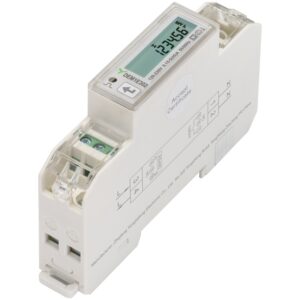
45 A Single-Phase DIN-Rail Energy Meter with RS485 and TOU
View Products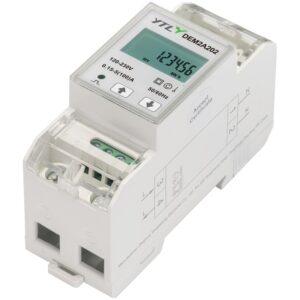
100 A Single-Phase DIN-Rail Energy Meter with RS485
View Products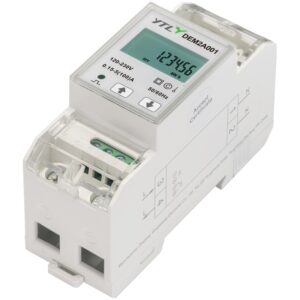
100 A Single-Phase DIN-Rail Energy Meter with SO Pulse Output
View Products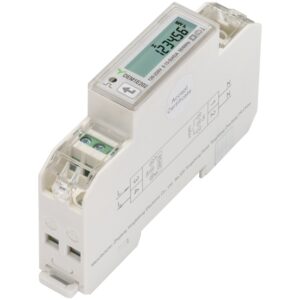
45 A Single-Phase DIN-Rail Energy Meter with RS485
View Products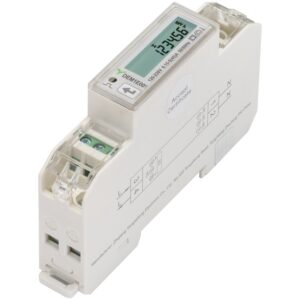
45 A Single-Phase DIN-Rail Energy Meter with SO Pulse Output
View Products 45 A Single-Phase DIN-Rail Energy Meter with RS485
View Products 45 A Single-Phase DIN-Rail Energy Meter with RS485 and TOU
View Products 100 A Single-Phase DIN-Rail Energy Meter with SO Pulse Output
View Products 100 A Single-Phase DIN-Rail Energy Meter with RS485
View ProductsIdentify main feeders, transformers, MCCs, production lines, utilities and equipment groups with their responsible operating or cost owner.
Provide wiring type, voltage, current, direct or CT/PT input, transformer ratio, phase sequence and any power-quality or event requirement supported by the selected meter model.
State whether data supports allocation, load visibility, maintenance investigation, demand review, power-quality analysis or another defined process.
Confirm cabinet type, space, auxiliary power, environmental conditions, access constraints and planned shutdown window.
Provide system owner, interface, protocol and register needs, network topology, data interval and cybersecurity or access constraints.
Agree on electrical comparison, CT/PT ratio validation, phase and polarity checks, data mapping, communications and site acceptance documentation.
The required measurements depend on the operating decision. Start with the feeder or equipment map, then define whether the project needs energy, power, demand, power factor, harmonics, events or other model-specific data.
Provide the wiring arrangement, transformer secondary values and ratio, phase sequence, input range, auxiliary supply, panel format and the required validation method.
A project can assess this when the selected model interface, protocol document, register map, network architecture, address plan and system acceptance criteria are available.
Define the data owner, required values, reporting or alarm workflow, data interval, labels and test criteria before selecting the meter and gateway route.
Tell us your requirements and our team will provide a professional solution and quotation within 24 hours.
 Optimized by Seraphinite Accelerator