

Here’s a comparison of different communication protocols used in smart three phase power meters:
PLC (Programmable Logic Controller) Communication
* Protocol: DLMS, IDIS, or other proprietary protocols
* Description: PLC communication is typically used in industrial settings where the power meter is connected to a PLC controller that monitors and controls the power grid. The PLC receives data from the power meter and sends control signals back to the meter.
* Advantages: Wide range of compatible devices, reliable data transmission, and easy integration with existing industrial automation systems.
* Disadvantages: Limited range, requires additional hardware (e.g., PLC controller) and programming.
WIFI (Wireless Fidelity) Communication
* Protocol: TCP/IP, HTTP, or proprietary protocols
* Description: WIFI communication is used in smart homes, offices, and other environments where a wireless connection is required. The power meter connects to a WIFI router or gateway, which forwards data to a central server or cloud platform.
* Advantages: Easy installation, convenient for remote monitoring and control, and cost-effective.
* Disadvantages: Vulnerability to interference, limited range, and security concerns.
RS485 (Recommended Standard 485) Communication
* Protocol: RS-485 serial communication protocol
* Description: RS485 is a popular choice for industrial and commercial applications where high-speed data transmission is required. The power meter connects to an RS485 network using a serial communication cable.
* Advantages: Reliable data transmission, long-distance communication (up to 1 km), and easy integration with existing industrial systems.
* Disadvantages: Limited scalability, requires specialized cabling and connectors.
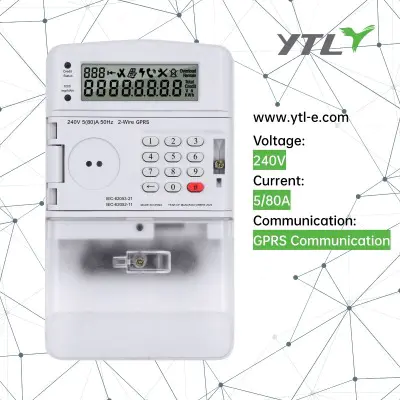
GPRS Communication
* Protocol: GPRS/2G/3G/4G cellular network protocol
* Description: GPRS communication is used in industrial settings where remote monitoring and control are required. The power meter connects to a cellular network using a GPRS module.
* Advantages: Wide coverage, reliable data transmission, and easy integration with cloud platforms.
* Disadvantages: Requires cellular network subscription and coverage, limited bandwidth, and security concerns.
In summary:
* PLC communication is suitable for industrial settings with existing automation systems.
* WIFI communication is ideal for smart homes and offices where remote monitoring and control are required.
* RS485 communication is suitable for industrial applications requiring high-speed data transmission over long distances.
* GPRS communication is suitable for industrial settings requiring remote monitoring and control over a wide area.
When selecting a communication protocol for your smart three phase power meter, consider factors such as your specific application requirements, available infrastructure, and the level of security you need.
