

DC meter and AC meter are two essential instruments used in electrical engineering to measure the flow of current in a circuit. While both meters serve the same purpose, they differ in their functionality and application. In this essay, we will explore the differences between DC meters and AC meters.
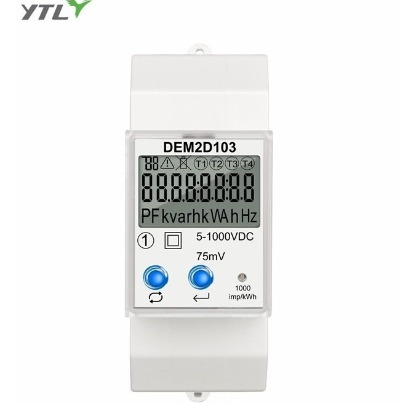 above all, significant difference between a DC meter and an AC meter lies in their ability to measure direct current (DC) and alternating current (AC) respectively. DC meters are designed to measure the flow of current in a circuit that flows in one direction only, such as in batteries or solar panels. On the other hand, AC meters are capable of measuring the flow of current that constantly changes direction, as seen in household electrical systems and power grids.
Another key difference between the two meters is their internal mechanisms. DC meters typically utilize a moving coil mechanism, where the current passing through a coil creates a magnetic field that deflects a pointer on a scale to indicate the current flow. In contrast, AC meters commonly employ a moving iron or electromagnetic mechanism. The alternating current induces a magnetic field that interacts with a stationary coil, resulting in the movement of a pointer to indicate the current flow.
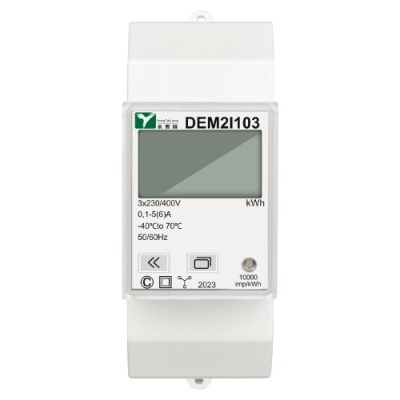 Moreover, the calibration of DC meters and AC meters differs due to the nature of the current they measure. DC meters are calibrated to measure the average value of the current flow, known as the root mean square (RMS) value, which accurately reflects the power delivered by the current. Conversely, AC meters are calibrated to measure the effective value of the current, which takes into account the varying magnitude and direction of the current over time. This allows AC meters to provide a more accurate representation of the actual power delivered by alternating current.
In addition, the construction and design of DC meters and AC meters also exhibit differences. DC meters are typically built with a simple and robust construction, as the unidirectional flow of current allows for a simpler mechanism and design. On the contrary, AC meters require more complex construction to accommodate the changing direction and magnitude of the current. They often incorporate additional components such as rectifiers and filters to ensure accurate measurement.
Furthermore, the applications of DC meters and AC meters vary based on their specific capabilities. DC meters are commonly used in applications where a steady and constant flow of current is present, such as in automotive systems, battery charging, and electronic circuits. In contrast, AC meters are widely utilized in residential, commercial, and industrial settings to measure the alternating current flow from power sources to various electrical devices and equipment.
In conclusion, the differences between DC meters and AC meters are evident in their ability to measure different types of current, their internal mechanisms, calibration, construction, and applications. Understanding these distinctions is crucial for electrical engineers and technicians to select the appropriate meter for specific electrical systems and ensure accurate measurement of current flow.
